


Thirty years ago this week, on July 22, 1996, The Daily Show aired its first episode. To mark the occasion, LateNighter editor at large Bill Carter is tracing the Comedy Central series’ remarkable evolution over three days leading up to Wednesday’s 30th anniversary. He begins at the beginning—with the unlikely collection of executives, producers, and performers who created the show, the obstacles they encountered along the way, and everything that happened before Jon Stewart arrived.
Get stories like this in your inbox: Sign up for LateNighter’s free daily newsletter.
Doug Herzog, newly installed as president of Comedy Central, walked in the door looking for what he called “a home-base, flagship” program for the channel, which was, at that point, “a ragtag collection of Gallagher specials, Cheech and Chong movies, and Benny Hill.”
None of that was drawing any ratings; worse, none of it was “giving viewers our comedic take on the world.” Herzog knew where he wanted CC to make its mark. “I was obsessed with late night, Carson first, then Letterman.” Finding a multi-night-a-week late-night show was, for him, a white whale.
Comedy Central did have a late-night franchise in Bill Maher’s Politically Incorrect, but Herzog didn’t see political comedy as the channel’s identity. He saw a “guidepost” in ESPN’s SportsCenter, then the hottest show on cable, with a nightly take on the world from a lighter, more fun-and-games, pop-culture perspective.
Besides, two weeks into the job, Herzog learned Maher had signed, without notifying his current employers, to move his show to ABC. Done deal. “I was like, f*ck that,” Herzog said.
The pressure to find a new format ratcheted up. Herzog knew he needed a leader for his daily take-on-the-world show, and one with a “perfect pedigree” happened to be in-house.
Every late-night insider knew who Madeleine Smithberg was. She had been a key player in David Letterman’s breakout success on NBC’s Late Night with David Letterman, producing the regularly hilarious oddball-guest segments—among them “Kamarr the Discount Magician” and “Rena Smaha and Her Monkey Friends”—that helped define Letterman’s brand. She followed that by serving as showrunner on Jon Stewart’s first late-night show, which began on MTV and later moved to Paramount syndication.
Smithberg was developing an idea for Comedy Central, a weekly Larry Sanders-esque show about a fictional cable network. She had less-than-zero interest in running another daily comedy series. “I turned Doug down four times,” Smithberg said.
“She told me, ‘You’ll never do it. You can’t afford it,’” Herzog said. “That was the reason the Stewart show didn’t continue on MTV.”
Herzog tried every other producer he could think of, including Dick Clark. The persistent response: “You guys can’t beat the networks. Why even try?”
But then came the encounter both parties agree directly led to the show, in which Herzog confronted Smithberg in a hallway at Comedy Central and pinned her to a wall—not at all in a “Me Too way,” Smithberg assures.
Herzog told her: “I’m gonna give it a year, no pilot. We’re gonna put it on, keep at it till we get it right.”
The show would get 90 percent of Comedy Central’s production budget and 95 percent of its promotion budget. And it would be guaranteed to stay on for a full year.
“What idiot would say no to that?” Smithberg said. “Not me!”
Herzog could not have been more all-in. “I had decided it was our destiny. I was an evangelist about it. This was what we had to do.”
Smithberg had formed a creative partnership with a fellow resident of her apartment building on West 20th Street, Lizz Winstead. They would be the co-creators of The Daily Show: Winstead as head writer, Smithberg as showrunner.
Next step: a host. A huge fan of SportsCenter, Herzog had seen Craig Kilborn lead the late-night edition. “He was funny. He had a kind of faux Dennis Miller delivery.”
All parties were highly interested. But the first meeting with Kilborn became notorious at The Daily Show. Herzog recalled: “Craig comes in, sits down, and says, ‘Any of you guys work at MTV? Do you know Julie Brown?’”—meaning Downtown Julie Brown, the MTV VJ—“‘You know, I love the Brown sugar.’”
It looked to Herzog like Winstead was about to leap over the coffee table to strangle Kilborn. But he somehow turned it around, Herzog said. “By the end, he had them thinking: We don’t love him, but we think he can do it.”
Smithberg said, “Craig had authority and great timing. We kind of thought of him as our Ted Baxter. You just had to write him in a certain way.”
Just before the launch, Herzog decided they should do some test shows and put them in front of focus groups for reactions. Not a great idea.
“They hated the show with a red-hot heat,” Herzog said. “They hated Craig. They hated the idea. They’d never watch this.” Herzog drove home that night in a dark place.
Not Smithberg. “They knew me really well,” she said. “I can’t think of anything worse than listening to people who know nothing.” So, to get her through the detestable focus group, “They got me a massage therapist and a bottle of Dom Pérignon. Outside the two-way glass, I was on the table getting a massage and sipping champagne.”
The brutal opinions of the focus group changed nothing, Smithberg said. “Except my shoulders felt a little better.”
The show premiered on July 22, 1996, at 11:30 p.m. Politically Incorrect was still airing at 11 and would remain there until Maher left for ABC in November.
The immediate reviews were surprisingly positive, especially considering the focus-group reactions and the unusual—bizarre seems a better word—decision to produce the show without an audience.
“We thought, Lizz and I, that having an audience would diminish our importance,” Smithberg recalled. “And that was beneath us because we were just so intellectually superior.”
Herzog remembered: “They said a newscast doesn’t have an audience. I said, it’s a comedy show. It needs laughs. In those first shows, without an audience, the only person you would hear laugh was a producer. It used to make me crazy, this one little hollow laugh.”
Herzog begged to be humored. He told them: “Let’s try this with an audience, and if you guys don’t like it, we won’t do it.”
Smithberg and Winstead agreed to the test, though the location gave them some pause. The show rented the studio used by Sally Jessy Raphael’s daytime talk show.
“And we got the Sally Jessy Raphael audience,” Smithberg said. “They were loading them in with a guy with a megaphone saying, ‘Anyone with a walker, to the right! With mobility, to the left!’”
In front of that crowd, they put on a show using the same script and taped bits they’d used during the previous evening’s audience-free taping. “It was so daytime,” Smithberg said. “Everything on the set was pink. And there’s Kilborn up there.”
Still: “About, I would say, six minutes in, we said, ‘OK, you can stop. Doug, you were right.’” Herzog says it took three minutes.
They got laughs. It was a comedy show, not a news show.
Smithberg had never doubted the show was funny. From the beginning, the “field pieces” from the “correspondents” captured the tone they were going for: the deadest of deadpan. In the first episode, original correspondent Brian Unger did a piece about “Princess Kitty,” a famed commercial-acting cat star, and her devoted “mother.”
Unger never broke his “mock seriousness,” Smithberg said. Sounding like a reporter for CBS’s Sunday Morning, Unger intoned mournfully: “She had a fan club that adored her and press that likened her to Mary Tyler Moore.”
Another regular early feature, “Five Questions,” became part of the show’s main interview segment after Kilborn came in one morning following a date and said he had asked the young woman five questions. “One was: What does peripatetic mean?”
Smithberg told him: “That’s going into the show. We’re going to do that segment in all our interviews.”
She still remembers one question she came up with: “Is it sock/sock; shoe/shoe? Or is it sock/shoe; sock/shoe? I relive it every time I put shoes on.”
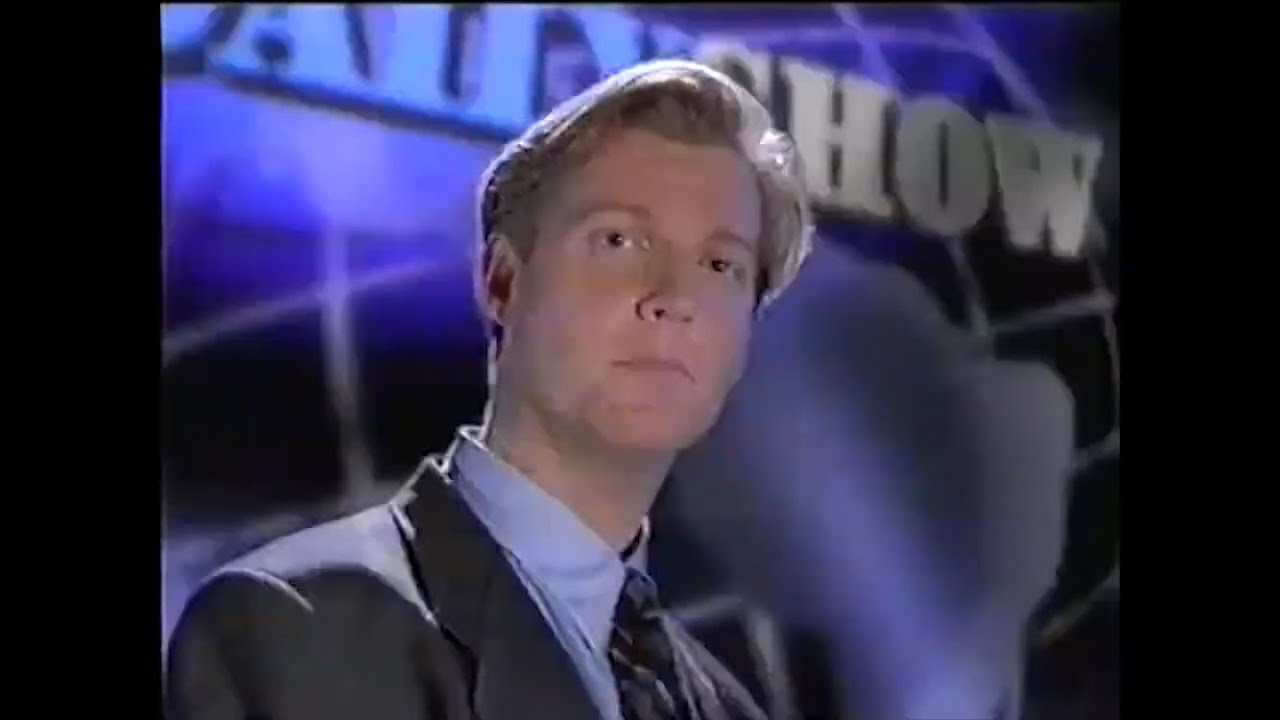
The show made noise; it gained traction. Stephen Colbert was added to the correspondent roster a year in. Comedy Central had earlier given him a temporary job writing promos because he’d just had a baby and needed medical insurance, Herzog said.
The show somehow survived the media backlash after Kilborn, in late 1997, gave a magazine interview in which he demeaned Winstead with a sexual innuendo. Herzog suspended him. Winstead demanded that he be fired and walked off the show when he wasn’t.
Upon reflection, Herzog says he spent too much time worrying about losing the momentum the show had built up and “not enough about protecting Lizz, which I certainly regret.”
That display of loyalty to the show’s star did not wind up helping when CBS decided to poach Kilborn to host The Late Late Show following Letterman. CBS’s then-top executive, Les Moonves, called to tell Herzog he had to let Kilborn go immediately, even though he still had time left on his contract.
Herzog was “really pissed, and I felt betrayed.” He saw no obligation to help out CBS—or the star his network had made.
“I was like, he’s not going anywhere until I find a new host,” Herzog said. Moonves pushed anyway and planned to announce Kilborn as CBS’s new late-night star, paired with Letterman.
“He tried to book Kilborn for CBS’s upfront presentation while he was still under contract to Comedy Central,” Herzog recalled. “It ended up with Craig being turned away at the door to Carnegie Hall—because a judge ruled in our favor.”
The win was only temporary. The Daily Show needed a new host. They auditioned, among others, Mike Rowe, David Alan Grier, and Michael McKean.
The problem was abruptly solved, partly through the awkward position in which Smithberg suddenly found herself. Letterman quietly pitched her on coming over to produce Kilborn’s Late Late Show for Worldwide Pants, his production company.
Did Herzog know she was also being poached? “Maybe not until he reads my book,” she said. Smithberg’s notably hilarious memoir, Finding the Funny, will be published early next year.
“But it turned out well for Doug,” she said. Because when Smithberg needed advice about whether to make the jump to CBS, she decided to call a friend.
“What do I do?” she asked Jon Stewart.
Smithberg recounted how Stewart methodically walked her through her quandary.
“Are you proud of The Daily Show?”
“Yes, very proud.”
“Is it a new way to deliver comedy?”
“Yes.”
“Do you look forward to going to work?”
“Yes, I’m really excited every time I open the newspaper and see what’s happening, and I trot off to work to make hay.”
“Do you like the people you work with?”
“Yes, I love them. I hired them all. They’re adorable.”
Smithberg said no to Dave.
Doug Herzog had not even thought to offer the job to Stewart. “In my mind, he would wind up at HBO or CBS.”
But he got a call from Stewart’s agency. Jon might be interested.
A lunch in Greenwich Village was set up. “Jon clearly had an opinion about the show. He articulated a broad vision. And he basically said yes. Right there,” Herzog said.
“We all raced out of there, jumped in a cab up to James Dixon’s office, and started working on a deal.” Dixon is the fabled “Baby Doll” of late night, manager to Stewart, Colbert, Jimmy Kimmel, and many more.
“We were absolutely over the moon. We had a second bite at the apple of a Jon Stewart late-night show,” Herzog said.
“The trajectory of The Daily Show changed. And we never looked back.”
In Part Two: Jon Stewart arrives at The Daily Show and begins reshaping it in his own image.




The Ted Baxter reference stands out in this first chapter! And god bless Herzog, Smithberg and Winstead for sticking to their guns and pushing the show forward!
The Ted Baxter comment by Smithberg is very childish. In interviews, Kilborn has said he let Smithberg run the show at the beginning, assuming she’d figure out the basics of late night – it’s always the host’s show. She never did. She misunderstood running the show and when she got to work with her favorite host Jon Stewart, she got fired. She thought it was her show and not the host’s.
Great article. It’s like an additional chapter to Carter’s fabulous anthology about late night but being offered for free. 🙃
This was a great read. Thanks, Bill Carter, for continuing to give us insights like this. I’m looking forward to the rest of the series.
Bill Carter really should have used the full Esquire (Jan. 1998) quotes from Craig Kilborn instead of short-handing them as “sexual innuendo.” Kilborn’s comments are truly horrendous and he should have been fired. A different time.
My favorite Comedy Central (nee Comedy Channel) late night offering was Allan Havey’s “Night After Night.” Kind of a hip take on Tom Snyder’s “Tomorrow” show. Nick Bakay as Allan’s sidekick and announcer. Audience of One, Cholesterol Carousel, the Mobley Hotel, Shagging and Bagging before Austin Powers gave that term new meaning. Hysterical basic cable stuff from ’89 to ’92.
It was a great show! Paul Prevenzo also hosted a program in the earlier years.
I GREATLY enjoy back stories of “storied” late night shows. This is terrific!
That colored South African couldn’t hack it. Nobody but Gen X watches or knows what this show is/was.
You can’t help but display your own racism and bigotry for the world to see, huh Zero you pathetic loser?
Because he gets no attention elsewhere. He wants my approval even though I’ll never give it to him. He’s just not interesting or relevant enough. You boomers caused so many problems in this world. You’re a menace.
IDGAF what you think of me! I enjoy verbally bitchslapping you for your ignorant hate fuelled posts that makes you look like the racist loser that you are! And your constant whiny responses constantly fills me with schadenfreude glee!
Keep on hate posting, and I’ll keep bitchslapping you, every…single…time! You don’t like it? Tough shit, Zero you loser!
You don’t make ANY other comments. You don’t read the articles. All you do is scan the comment section for MY comments. You think you’re gaining something because you have no hobbies, friends, family or career.
Nobody reads your comments. I literally just read part of the first sentence because it’s just the same inveterate faggotry. That’s the problem with your boomers jackals. You pride yourselves on obstinacy.
That’s a major weakness. It’s utter cringe.
You can’t function without my attention. You literally can’t just ignore my comments like the rest of us ignore yours.
Such pathetic whining on your part, Zero! I could feel your bumhurt tears flowing through you with that post!
I do read the articles! But you don’t, because every screed you post has to include attacking a marginalized group, like you did calling me gay for questioning your sanity! When you start attacking others for their sexuality, it does make one question yours, because you doth protest too much, twig!
I really don’t give a fuck about you! Nobody does! The responses you receive are people telling you to shut the fuck up, and grow the fuck up! Because your posts exposes you as a disturbed, hate filled loser with no friends and no future! And as long as you keep posting here, I will continue to respond to your posts and your whiny replies to me, because I can, and because I will!
Tissue, twiggy?😈
The fact that Bill Carter didn’t talk to Craig Kilborn is ridiculous and unprofessional. Kilborn has stated the show was produced the wrong way – they didn’t want a host driven show – and after he left for CBS the problems remained and Madeleine Smithberg was fired despite working with her favorite host Jon Stewart. She thought it was her show, defying the basics of late night – they’re host driven shows.