


On his final night as a late-night host, Conan O’Brien did not sound like a man trying to figure out what came next.
He sounded like a man trying to explain what he had been doing all along.
“I’ve devoted all of my adult life—all of it—to pursuing this strange, phantom intersection between smart and stupid,” O’Brien told viewers at the end of his final TBS show on June 24, 2021. He thanked the fans who had followed him through “this really crazy and seemingly pointless pursuit.” Then he offered a parting bit of advice: “Try and do what you love with people you love.”
Exactly five years later, that sounds less like a farewell than a clue to how he would keep redefining late night after leaving it.
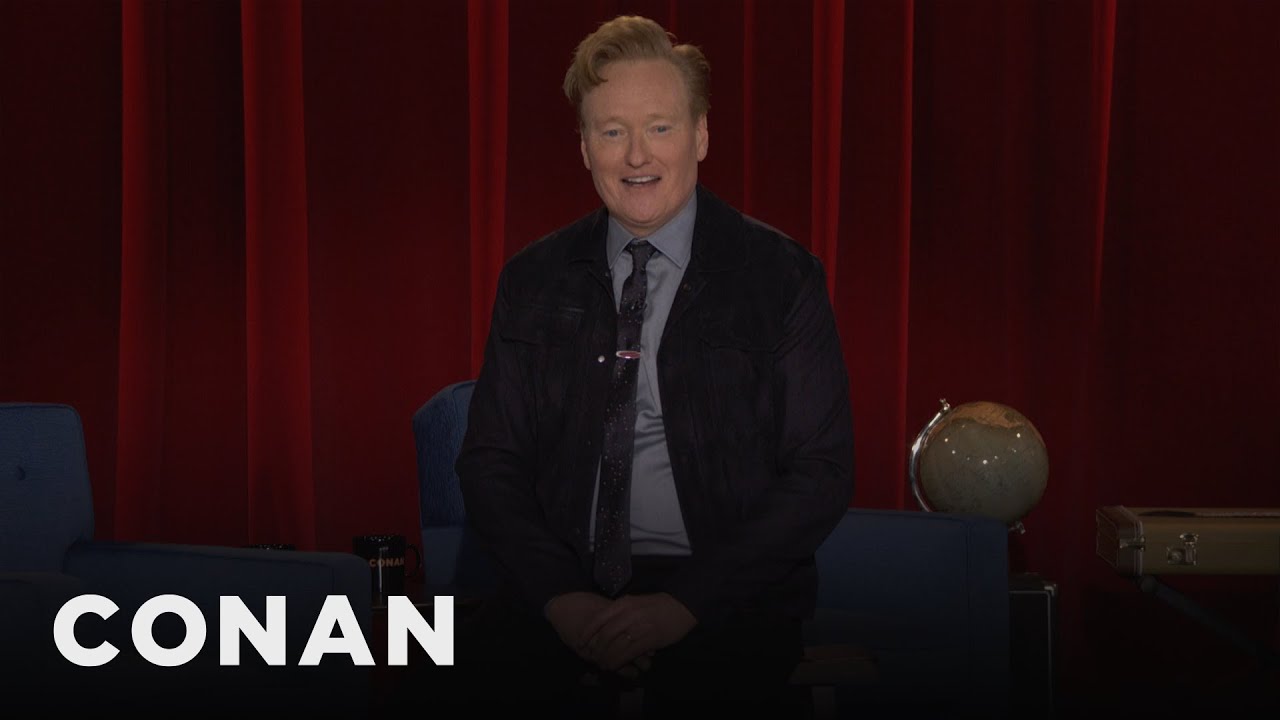
When Johnny Carson said goodbye to The Tonight Show in 1992, he left the door open with a kind of courtly uncertainty. “I hope when I find something that I want to do—and I think you would like—and come back, that you’ll be as gracious in inviting me into your home as you have been,” Carson told his audience.
He never did.
Carson became, by choice and temperament, the model of the vanished host: missed, revered, almost never seen. For decades, that was the most elegant version of a late-night afterlife. Leave beautifully. Reappear sparingly. Let absence do the mythmaking.
O’Brien has followed the opposite path.
Conan, the nightly show, is gone. Conan, the comic enterprise, has only grown more durable, more flexible, and more culturally central than it was when he was on television four nights a week.
That was not a given when he signed off from TBS. O’Brien was leaving a medium that had defined almost his entire adult life, but also one that had changed dramatically around him.
That possibility has fresh urgency now, with the end of Stephen Colbert’s Late Show. For Colbert’s nightly viewers, the fear is familiar: that when the show goes, the relationship goes with it. Conan’s post-TBS career suggests a more hopeful possibility: that late night, at its most durable, may be less a format than a bond.
Because for most hosts, the show is their identity. That makes the years after it, almost by definition, quieter. Carson disappeared into legend. Arsenio Hall raised a son, returned, then moved on again. Jay Leno has kept working, but never with the same cultural force that came with The Tonight Show. David Letterman has arguably had the most substantial post-network talk platform of the old guard with Netflix’s My Next Guest Needs No Introduction, but that has played largely as a reflective epilogue: Letterman after late night.
Conan’s second act has felt less like an epilogue than a format change.
The podcast was the hinge.
Conan O’Brien Needs a Friend stripped away almost everything the format had trained audiences to expect from him. No monologue. No desk bits. No celebrity dutifully plugging a project between commercial breaks. Just O’Brien, Sona Movsesian, Matt Gourley, and the wonderfully unstable engine of Conan’s personality: needy, learned, combative, self-lacerating, absurdly quick, forever toggling between grandiosity and embarrassment.
It did not feel like a retirement project. It felt like a distillation.
Once that was clear, everything else made more sense. His podcast business became big enough for SiriusXM to buy it. His TBS travel specials inspired an HBO Max travel series. His YouTube archive and FAST channel turned decades of late-night work into an always-on comedy library. The Oscars turned him into a recurring steward of one of television’s last true mass-audience rituals. His new role as Smarty Pants, a toilet-training tech toy in Toy Story 5, has brought him into one of Hollywood’s most durable family franchises. Even his role opposite Rose Byrne in If I Had Legs I’d Kick You suggested that the anxious current underneath Conan’s comedy could travel somewhere stranger than a monologue desk.
What those pieces add up to is not a comeback, exactly. A comeback implies a return to the place where the audience first knew you. O’Brien has done something more unusual: he has made the relationship bigger by breaking it apart, turning late night from a time slot into a sensibility that can travel across formats.
That does not make Conan’s path easily replicable. He had spent years building toward it, and his comic voice may be unusually well suited to fragmentation. A Conan segment was always a little portable because Conan himself was the bit: the panic, the neediness, the mock grandeur, the willingness to be humiliated and then somehow turn the humiliation into authority.
Not every host can become Conan after Conan. But the fear around Colbert’s exit rests on an old assumption: that without the nightly show, the bond between host and audience has nowhere to go.
Conan has spent the past five years disproving that.
He left the desk. He did not lose the room.
Get stories like this in your inbox: Sign up for LateNighter’s free daily newsletter.






I feel Colbert (as much as I love him) will not quite do a Conan because his fans have so much expectations of him—specifically, to stand up to Trump and Trumpism. Take those calls for him to host a live stream of the removal of the current president’s name from the Kennedy Center.
Sure, perhaps this is also because Conan hasn’t done much political humor, meaning his comedic sensibility has traveled better (and obscured Colbert’s talents a bit). In any case, the LOTR screenplay he’s doing is an interesting step. It’s not an on-screen role, but Colbert also thrived as a writer in his early years, so I’m certain he’ll do that quite finely.
I have to agree…Conan’s sensibility and fan base are more far-reaching than Colbert’s, simply because the latter has been boxed into the whole political humor prison (partly his doing, partly his audience’s).
I mean, the calls from Colbert’s fan base (of which I am a member) for him to run for public office are as absurd as demanding Michelle Obama go into politics. Leave the poor people alone and let them do what they are good at/have a desire to do. But fans of Colbert’s are adamant that he must – MUST – run to help save democracy. The man is a creative…leave him be.
Conan had more breathing room in the waning days of his TBS show to figure out his next steps, because there wasn’t as much attention thrown at him during his final years in late night, whereas Colbert’s spotlight has been shining on him almost non-stop during the Trump years and especially during his final year post-cancellation announcement.
I still have ALL of my “God Given Alienable ‘Rights.'” Nothing has changed for me. Am I missing something?
He just didn’t appeal to the boomers. His weird brand was funny to me, especially the staring contest with the small hat drummer and the rest of the interactions with the band.
But it would be struggling like the rest of them today because it’s obsolete and also got too political like pretending Haiti is a beautiful country. Lol
NBC should’ve been a little more patient with him on the Tonight Show, because he would’ve eventually delivered big in the coveted younger demographics. He managed to keep a lot of Letterman’s 12:30 Gen-X audience and was already beloved by Millennials when he got the gig. He seems to be relevant with Gen-Z as well, so while I don’t know if he would’ve ever been able to consistently beat Letterman in the overall ratings, I do think he would’ve ultimately grown the larger 18-34 audience.
He would have only hemorrhaged more viewers to Colbert. All his viewers knew who he was because he came on after Leno, who was always number one ahead of letterman, back when numbers actually mattered, unlike today.
They milked these aging cash cows as long as long as they could. I don’t think they saw it sputtering like this in 2026, but I think they knew something was coming.
I also don’t feel sorry for him or any of them because they are extremely rich and famous insiders, not impoverished Everyman victims like the boomers on here pretend they are.
*He would have only hemorrhaged more viewers to Letterman.
Conan would NOT listen to Network Executives in “broadening out” his show. He was too niche for 11:35.
18-34 was considered “niche” for Broadcast Television. 18-49 is more broad based, or was in 2009. 18-34 was MTV-like.
The problem is that NBC held on to Leno for “insurance” because Coco lost to Craig Furguson for a while prior to taking over “Tonight.” Jay had two years. Coco had seven months.
Where on the doll did the boomer touch you?